Q-Tip Test Method . Q, on the other hand, looks for correlations between subjects across a sample of variables. The name q comes from the form of factor analysis that is used to analyze the data. A COVID19 glossary What the terms mean and some subtle differences from www.cbc.ca 6.1 shows an intraoperative example of the test as it is being used to estimate the relative position of the urethrovesical junction during a modified pereyra procedure. Only apply this method with your pet cat, not with unfamiliar cats. This may be tmi.and i've never tried the q tip method before, but i do try to 'kind of' keep track of cp and have noticed that i will consistently get.
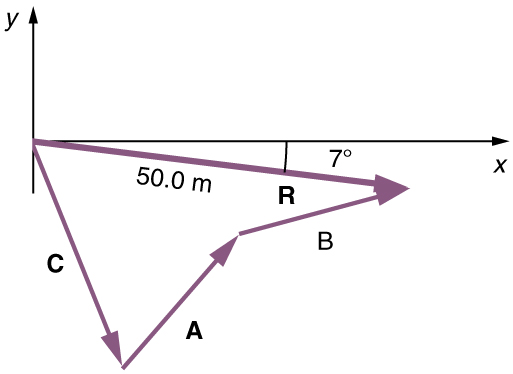
Head To Tail Method Vectors. What was the ``head to tail'' method of adding vectors? Little arrow tip to tail addition or parallelogram addition work equally well.
Vector Addition and Subtraction Graphical Methods · Physics from philschatz.com
This is your resultant (summed) vector. It is also important to note that the resultant is independent of the order in which the vectors are added. To add vectors and geometrically, do the following:
Little Arrows Are A Tool That Can Help You Add Vectors Such As Forces.
Choose a suitable scale for thevectors so that they can be plotted on the paper. And so forth until all vectors have been added. In the polar form, you can either add 180 degrees to the angular coordinate or negate the radial coordinate (either method should work).
We Will Only Deal With Perpendicular.
Where the parallel lines intersect is the head of the resultant vector that will also start at the origin. Choose a suitable scale for the vectors so that they can be plotted on the paper. To determine the sum of the two vectors, we draw a straight line that starts at the tail of →a a →, and ends at the tip of →b b →.
We Start With The B.
A confusion regarding the head to tail method for vector addition. The tail of the vector is the starting point of the vector, and the head (or tip) of a vector is the pointed end of the arrow. This video discusses the basic notion of a vector, and how to add vectors together graphically as well as what it means graphically to multiply a.
We Can Help You Find Direction With This Video.
Move vector in parallel with itself so that its tail (starting point) touches the tip (arrow head) of vector. To add two vectors graphically, we can use either the tail to head method or the parallelogram rule. Use a ruler to draw the resultant vector from the tail of vector a to the head of vector b.
In This Method We Draw The Two Vectors With Their Tails On The Origin.
We can easily visualize the tip. What was the ``head to tail'' method of adding vectors? Ask question asked 2 years ago.
Comments
Post a Comment